









Making friends as an adult can feel surprisingly complicated, especially when busy schedules, life transitions and loneliness get in the way. Writer Anna Fothergill reflects on the challenges of finding meaningful friendships in your thirties and the comfort of knowing that our deepest sense of belonging begins with God.
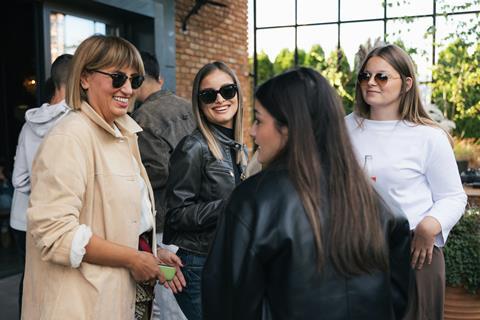
Nobody warned me that making friends in your thirties would feel a little bit like dating. You meet someone you quite like. You have a pleasant conversation. You wonder if there is ‘friendship potential’. You consider suggesting coffee. Then you spend three days wondering whether that would seem too forward before eventually sending a message that sounds suspiciously like a first date invitation.
“Hey! It was so lovely chatting. Let me know if you’d like to grab a coffee sometime!”
READ MORE: Letter to the Next Generation: Friendship can be messy and fragile but Jesus at the centre makes it stronger
And then you wait and hope and pray. When we are children, friendship seems effortless. At school, proximity does most of the heavy lifting. You sit next to someone who also likes horses, dinosaurs or collecting weird-shaped rocks and suddenly you have a best friend. As adults, it becomes considerably more complicated.
People have careers, spouses, children, mortgages, church commitments, ageing parents and calendars that require military-level planning. Friendship moves from being something that happens naturally to something that must be pursued intentionally. For many people, this transition comes as a surprise. I know it did for me.
READ MORE: ‘God gave me friends’ and other testimonies…
I’ve spent much of my life moving. My family relocated to South Africa when I was four. We moved back to the UK when I was eleven. Then there was New York in 2018, followed by another move to South Africa in 2021. Being what is known as a ‘third culture kid’ plus an extrovert, I’ve never particularly struggled to make friends. I can happily strike up a conversation with almost anyone. But making friends and finding your people are not necessarily the same thing.
For years, I had plenty of friendships but still experienced a nagging sense that I hadn’t quite found my tribe. The people who understood my quirks. The friends who felt like home. It wasn’t helped by my nomadic lifestyle and that my friends never really knew what continent I was on. It wasn’t really until my late twenties and early thirties that those relationships began to emerge. Perhaps that’s because friendship, like many worthwhile things, often takes longer than we expect.
Social media certainly doesn’t help. It can feel as though everyone else belongs to a perfectly curated friendship group. There are matching pyjamas on girls’ weekends, birthday brunches attended by twenty close friends and photographs of smiling people who appear to have been inseparable since birth. Meanwhile, I’m waiting for a message from that cool chic I met at a friend’s BBQ and wondering whether it’s acceptable to invite someone I’ve known for 5 minutes to my birthday. In fact, there have been many years as I moved yet again, where I have found myself quite lonely and unknown in a new city. The reality is that many adults are lonelier than they appear. Despite living in the most connected generation in history, loneliness has become a common experience. Many people are quietly asking the same questions: Why does everyone else seem settled? Why haven’t I found my people yet? Is something wrong with me?
READ MORE: Five things I have learned about…female friends
The answer is a resounding NO! Life simply unfolds differently for different people. Some people find lifelong friends at university. Others meet them through church, work, parenthood or a random conversation at thirty-two. There is no biblical deadline for belonging. In fact, Scripture places enormous value on friendship. Proverbs 17:17 tells us, “A friend loves at all times.” Ecclesiastes 4 reminds us that two are better than one because they can support and strengthen each other. Even Jesus surrounded Himself with close friends.
Human beings were never designed to do life alone, but friendship in adulthood often requires courage.
Human beings were never designed to do life alone, but friendship in adulthood often requires courage. It means being willing to initiate. To invite. To follow up. To risk the occasional awkwardness and to spend much of the first part of your interaction giving history lessons of your lives. It means accepting that meaningful friendship is built gradually through shared experiences, repeated conversations and time.
If you’re feeling left behind, I think it’s important to remember that loneliness is not always evidence that you’re failing. There have been seasons of my life where I felt deeply lonely despite being surrounded by people. There have also been seasons where a handful of genuine friendships brought more fulfilment than a room full of acquaintances ever could. And there are friends I now have, where it was “love at first sight”. Suddenly I can’t imagine my life without this friend, and they were worth the wait. Quality matters more than quantity.
And while friendship is a gift, it was never designed to carry the full weight of our identity or worth. One of the most comforting truths in Scripture is that our belonging begins with God. Long before we find our tribe, we are known. Before we are invited into a friendship group, we are invited into relationship with Him.
Psalm 139 paints a picture of a God who knows us completely. Romans 8 reminds us that nothing can separate us from His love. That doesn’t eliminate loneliness overnight, but it does mean we are never truly abandoned. If you’re still looking for your people, don’t lose heart! Keep showing up. Keep extending invitations. Keep joining groups, serving at church, attending events and saying yes to opportunities to connect.
Sometimes the friendships that shape your life arrive later than expected. Mine certainly did. And looking back, I can see that God was building something all along. Not just a circle of friends, but a deeper understanding that belonging was never something I had to earn. It was something He had already given me. The tribe eventually came. But God’s presence got there first.
























No comments yet