





Ann-Louise Graham reflects on the lessons God taught her during her years living and working in West Africa. From witnessing the devastating effects of famine to seeing the gospel transform lives in unexpected places, her experiences in Niger taught her about gratitude, suffering, hope and trusting God’s sovereignty.
When I read the headlines reporting that missionary pilot, Kevin Rideout, had been released after being kidnapped and held for ten months in Niger I felt such joy as I had been praying for him. I had flown with these brave pilots a few times in tiny four-seater Cessnas across Niger to Galmi Hospital, a Christian teaching hospital situated around 500 kilometres (310 miles) east of the capital, Niamey, in sub-Saharan Africa.
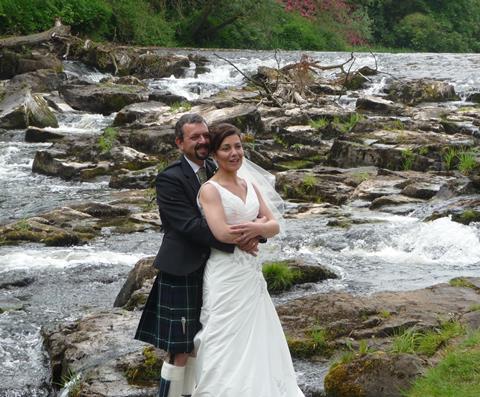
I had stepped out of one of those Cessna aeroplanes back in 2011 together with my husband, Norman. We were recently married and, at 40 years of age, old by Western standards to be getting married—and positively ancient by African norms. But that didn’t seem to bother the Nigerien men from the nearby village who worked with Norman on a construction project at the hospital supported by the missionary organisation SIM. Together, they were labouring to build a new surgical wing in average temperatures of 40 degrees. They ambushed him with hugs while the local women sang out a song in Hausa. What a welcome.
The news also brought with it a string of memories from West Africa—a place that had been my home for several years. Now back in the UK, Niger is far away, and yet life there has left a permanent mark on me. Looking back, God taught me many things during those years—not least that life is fragile.
Working as a writer and photographer for a large Christian charity meant that I spent much of my time documenting its effects on women and children.
The risk of famine is never far away in Niger. Working as a writer and photographer for a large Christian charity meant that I spent much of my time documenting its effects on women and children. Typically, I would be dropped at a feeding centre in a village early in the morning while my colleagues travelled on to work in other villages, and I would be collected later in the day. These were remote places by anyone’s standards. There were no roads; we travelled in Land Cruisers, cutting through the sand. Using my poor French, I would find someone who could help me interview women in Hausa. But some experiences do not require words.
Mothers holding the emaciated bodies of their babies told their own story. Many had walked very long distances in blistering heat, without even a pair of flip-flops, to obtain Plumpy’Nut—a calorie-rich therapeutic food provided in sealed sachets that does not require water for mixing. Clean water is a rare commodity in Niger, and contaminated water can be a killer.
Today, back home, there is a sign over our front door. You cannot miss it. It reads: Be Grateful. Gratitude journals have become a big deal in recent years, but looking back, it is the small things for which I am grateful. Every morning I thank God that I can make a cup of tea with clean water straight from the tap in my own home. I have a fridge that is stocked with food. I sleep in a comfortable bed. I have a flushing toilet.
By God’s grace, I am already remarkably rich compared with so many of the people I met in Niger. And recognising the fragility of life and the immense privileges God has given me continues to restrain—although not cure—my temptation to throw myself a pity party over the things I think I lack. But I don’t want to romanticise poverty. Niger remains one of the poorest countries in the world, and life can be extraordinarily hard. Yet God also taught me to remain hopeful. On one occasion, I had been in a feeding centre all day speaking to women when the car arrived to collect me. In the distance, I spotted a woman and a young girl, each carrying something. I asked the driver to give me a few more minutes and ran towards them. The woman and her young daughter were each carrying an emaciated baby—a set of twin girls.
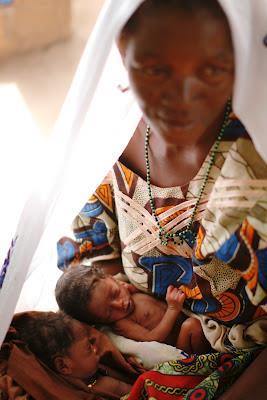
I quickly took their photograph and scribbled down their details. As I jumped back into the car, I have to admit my heart was very heavy. What were the chances that babies so fragile and weak would survive? I didn’t have much hope. But I had captured their story, determined that their lives would at least speak through the photographs.
Girls are particularly vulnerable in Niger, which also has an extremely high rate of child marriage. Yet here was a mother willing to walk for miles in blistering heat to get help for her daughters. Several months later, a colleague arrived from New Zealand. Understanding the power of stories, he asked if I knew of any he could document for people back home.
“Well,” I said, “several months ago I was in a feeding centre in the Maradi region. I don’t know what happened to them, but if you can trace those twin girls and, by God’s grace, they are still alive—then you have a story of hope.” Against remarkable odds, he managed to trace the family. The twin girls were alive and healthy. My heart soared.
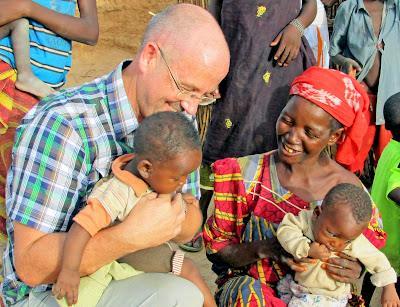
Earlier in my Christian life, I had struggled to understand why God would allow babies to die of malnutrition. The problem of suffering is immense, and I didn’t come home from Africa with all my questions answered. But God taught me to keep trusting his sovereignty, even when the circumstances in front of me made no sense. There were other moments when I caught glimpses of what God was doing in the most unexpected places.
On another occasion, I had been dropped in a remote village to document a school project. The school was little more than a glorified shed with a wicker roof and a dozen old-fashioned wooden desks plonked on the sand. But it was a school nevertheless.
As I stood in the shade waiting for the car to come back for me, I noticed a girl of about 11 staring at me.
As I stood in the shade waiting for the car to come back for me, I noticed a girl of about 11 staring at me. I was a curiosity. In French, I asked her what her name was. In a predominantly Muslim country, I expected to hear a name such as Fatima or Hannatou.
Instead, she replied, “Deborah.”
Deborah? Was the 40-degree heat starting to get to me? I asked her again.
“Deborah.”
Then she waved her arm and encouraged me to follow her. So I did. She led me through the village to her family’s hut, where, to my absolute amazement, I met her parents and her sister. Through our very imperfect communication, I learned that her father had been given a solar-powered audible Bible. He had heard the gospel and become a Christian—and so had his family. I have never forgotten Deborah.
There, in a remote village in Niger, far from anywhere I knew, God had reached one family with the gospel. Of all the things Africa taught me, that is one of the most important: God’s work is not limited by the places and circumstances that look impossible to us.
There are many good Christian workers in Niger. I was there for a relatively short time compared with missionaries who have given years of their lives to serving there. But those years taught me something about the need for dependence on God and for a gospel perspective on suffering. Constantly photographing profoundly sick children and then poring over those images afterwards was difficult. Compassion fatigue is real. There were times when I felt overwhelmed by the scale of the need and by how little I seemed able to do about it. And yet the gospel helped me to see suffering as part of a bigger story. It did not make suffering less painful or give me neat answers for everything I saw. But it reminded me that ultimately suffering does not have the final word. The gospel does. And that gave me a reason to keep doing the work God had placed in front of me.
I also began to understand more clearly that privilege brings responsibility. If God has given me resources, opportunities, education, a voice and the ability to tell stories, then those things are not simply for my own benefit. They are gifts to be used. I learned—and I am still learning—not simply to feel deeply about suffering, but to ask what faithfulness requires of me.
Perhaps that is also where Christian resilience comes from. Not from pretending that everything is fine, or from somehow becoming untouched by suffering, but from understanding that suffering—both our own and that of others—is part of life in a fallen world. We grieve it. We respond where we can. But we are not defeated by it. Instead, we keep running the race God has set before us, trusting that he gives the grace to do what he calls us to do and that ultimately the results belong to him.
And as I learned to recognise God’s sovereignty in the lives of others, I also began to see it more clearly in my own. Before meeting my husband, I had been working for a secular organisation in Dakar, Senegal, when I unexpectedly lost my job. At the time, it simply felt like a door had closed. I was a new Christian, uncertain what would come next, and without work. But another door opened. I interviewed for a job with a Christian charity and was offered the position. It was a better role, but more than that, I found myself surrounded by African Christian colleagues. We began our working days with Scripture and prayer, and my young faith was nurtured in ways I could not have anticipated.
Looking back, I can see that God was at work even in the disappointment. Several years later, though, I decided to leave West Africa. I was tired and wanted to return to England. As far as I was concerned, that chapter of my life was over. Then the phone rang. Would I go back to Niger to help document a famine? I agreed. One more trip.
And it was during that visit that I met and began to get to know Norman, the man who would later become my husband. So perhaps one of the greatest lessons Africa taught me is one I am still learning: we make our plans, but God orders our steps. I could never have mapped out the route that took me from England to Senegal and then to Niger; from losing one job to finding another; from deciding to leave Africa to returning once again; and eventually to stepping out of a tiny Cessna beside my husband under an African sky. But God could. And when I look back now, I can see his faithfulness in it all.






















No comments yet